Showing posts with label Japanese culture. Show all posts

Tuesday, November 8, 2016

Onsen, hot spring in Nagano


Hello. This is Murasaki Japanese Institute.


Today, I would like to introduce onsen, hot spring in Nagano.
I think Onsen reminds you Hakone or Beppu in Fukuoka, however, there are a lot of onsen in middle of Hoshu like Nagano, Yamanashi prefecture.
 
Nagano is mountains area. You can enjoy nature green, autumn leaves, hiking and onsen.

There are many big onsen towns and small onsen towns. You can find information about big onsen towns in a lot of website like;

This is very nice website about Nagano.

This time, I would like to pick up a small onsen town, Yamada onsen. It is small town which has less than 5 ryokan, Japanese style inn, but, their hospitality is so nice.
For example, they has free bus tour in the morning to see Autumn leaves, beautiful water falls etc.
This is the picture to see one of the water falls.


And in another water falls, you can see it from back side of it.
There is a cave and you can go through it.


You can taste nice sake in dinner time.
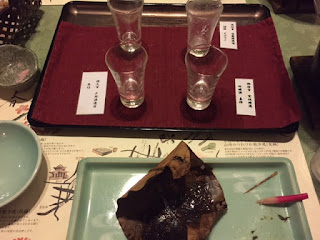
They have big bath and small private bath which you can make reservation and use private 30 minutes. The view from there is so nice, autumn leaves etc.
 

Next day, they send you to Obuse station. You can enjoy Obuse town. 
There are a good path to walk around,
,

And there are nice restaurant;

Kamo nanban, backwheat noodle with duck meat,

Tofu full course lunch,
 
There are the tomb of Masanori Fukushima. He was one of samurai who was in the service of Hideyoshi Toyotomi.


Enjoy your trip in Nagano!


Thursday, January 1, 2015

お正月(しょうがつ) Oshōgatsu New Year’s Day


<正月(しょうがつ) Oshōgatsu New Year’s Day>

日本人(にほんじん)がどうやってお正月(しょうがつ)(いわ)うのか()っていますか。
正月(しょうがつ)日本人(にほんじん)にとって、とても大切(たいせつ)祝日(しゅくじつ)です。沢山(たくさん)特別(とくべつ)行事(ぎょうじ)が行われます

Do you know how Japanese people celebrate their New Year’s Day?
New Year’s Day is the most important holiday in Japan. Many special events
take place during the first three days.

初詣(はつもうで)---沢山(たくさん)(ひと)神社(じんじゃ)やお(てら)()って一年(いちねん)幸運(こううん)を祈ります。
Hatsumōde---Many people go to the shrine and temples wishing for the good
Fortune and good luck during the year ahead.


おせち料理(りょうり)---正月(しょうがつ)におせち料理(りょうり)という特別(とくべつ)料理(りょうり)()ます。おせち料理(りょうり)
        重箱(じゅうばこ)()われるうるしの(はこ)にきれいに(なら)べられています。
 People eat special food called Osechi ryōri (New Year’s special food)
   Osechi ryōri are beautifully arranged in the lacquer box called Jubako.
それぞれの料理(りょうり)には特別(とくべつ)意味(いみ)があります。
Each dish has some special meanings.


 黒豆(くろまめ)--めに(はたら)きまめ(健康(けんこう))になります。

 Kuromame (black beans) 
    —working hard and become healthy.


 伊達巻(だてまき)---学問(がくもん)上達(じょうたつ)します。

Datemaki( egg omelet)
Because the shape looks like a scroll, it is
associated with scholarship.


 きんとん---金持(かねも)ちになります。
   Kinton (sweet potatoes and chestnuts)
the word ‘kinton’ means golden dumplings, and the color looks like a gold.
    It is associated with treasure.

こぶまき---(しあわ)になります
   Kobumaki (dried herring wrapped in seaweed)
the word ‘kobu’ means to be happy.


田作(たづく)り---収穫(しゅうかく)にめぐまれます。
Tazukuri (dried sardines)
In ancient times, dried sardines were used for fertilizer for the rice field.
    Also Tazukuri literally translates as ‘making rice corps’. It is associated with
    Good harvest.


(かず)()--- 子宝(こだから)(めぐ)まれます。
    Kazunoko (herring roe)
        Herring roe contains a lot of eggs and the word ‘kazu’ means number and ‘ko’ means children. That means you are blessed with many children.


海老(えび)---- (なが)()きられます
   Ebi(shrimp)
      Because the shape of curved body, it is associated with longevity. Because when
people get older, their bodies are hunchbacked.


③お雑煮(ぞうに)()べます。
 雑煮(ぞうに)は、お正月(しょうがつ)()べられる特別(とくべつ)汁物(しるもの)です。地域(ちいき)によって具材(ぐざい)やだしが(ちが)います。
 Ozōni is a special soup eaten on New Year’s Day. Ingredients for Ozōni differ from region to region.


  関東(かんとう)Kanto style (clear soup) 


関西(かんさい) Kansai(white miso soup)


  (ねん)賀状(がじょう)をもらいます。
     2015(ねん)干支(えと)(ひつじ)です。(ひつじ)()がついた(ねん)賀状(がじょう)交換(こうかん)します。
    We receive New Year’s Cards on New Year’s Day. The Chinese zodiac sign of the 2015   will be the year of the sheep ‘hitsuji’. So you will exchange many nengajo like Christmas cards with the picture of the sheep.


 お正月(おしょうがつ)(かざ)

      門松(かどまつ)鏡餅(かがみもち)(かざ)っておき、氏神(うじがみ)(さま)をお(むか)します。
   We have placed ‘kadomatsu’ in pairs in front of houses to welcome year God and
      displayed ‘Kagamimochi’ for the offering to Year God.


 鏡餅(かがみもち) (かたち)(かがみ)()います。
 kagamimochi/mirror rice cake
The round shape looks like a mirror.


 門松(かどまつ) 
 Kadomatsu/pine decorations 


皆様(みなさま)昨年(さくねん)一年(いちねん)大変(おせ)お世話(おせわ)になりました。
 Thank you for everything you did for us this past year.
どうぞ()(とし)をお(むか)(くだ)さい。
Please have a good new year!

---- by Yada-sensei

Tuesday, December 9, 2014

六曜(ろくよう) Lucky date calendar.

Hello This is Murasaki Japanese Institute.

We have comment about Facebook article, so we would like to introduce Japanese (Chinese Origin) Calendar, 六曜(ろくよう)


先勝(せんしょう) Morning is lucky

友引(ともびき) Morning and evening is lucky, but noon is bad. 
             It is good day to hold a wedding party 
             because this letter means pulling your friends. 
             Therefore you have to hesitate to hold a funeral.
              90% of Japanese believe this when you hold a funeral.

先負(せんぷ)Afternoon is lucky.

仏滅(ぶつめつ)All day long is bad luck. 
            80% of Japanese try to hesitate to hold a happy event like wedding, 
            so, a lot of hotel offer half price or good discount if you hold a wedding party.

大安(たいあん)All day long is good luck. A lot of people try to hold a wedding party this day.

赤口(しゃっこう)Bad luck day except noon.
説明を追加